A hotel deal in the news is not the news. The procurement decisions a deal triggers — sometimes within ninety days, sometimes over the next two years — are the news. That is the framing every hotel supplier should bring to deal-flow coverage, and it is the framing we use when we triage signals here at InnLead.
This week, three deals stood out from the 1,847 hospitality signals our intelligence feed indexed between May 1 and May 8. They are different in shape — a single-asset luxury trade, a luxury brand entering a continent for the first time, and a multi-asset portfolio consolidation — but each one opens a specific, datable supplier opportunity window. If your business is hotel FF&E, OS&E, amenities, technology, or operating supplies, these are the deals worth a Monday-morning planning session.
1. JW Marriott Marco Island sold for $835M — the 90-day re-tender window
JLL’s Hotels & Hospitality group arranged the $835 million sale and $690 million financing of the JW Marriott Marco Island Beach Resort. The 809-room beachfront property in Florida traded at roughly $1.03 million per key — one of the largest single-asset hospitality trades of 2026 so far.
The supplier signal. When a property of this scale changes ownership, the new operator runs a comprehensive operational review within 60 to 90 days. Every existing contract over $250K gets re-evaluated — sometimes renegotiated, sometimes re-tendered, occasionally cancelled. For an 809-room beachfront resort, that touches:
- F&B operating supplies — china, glassware, flatware, linen — the highest-volume consumable categories
- In-room amenities — bath, bedding, paper, minibar
- Spa and pool consumables — premium-segment beach resorts run continuous spa and pool programs that consume large volumes of specialty product
- Banquet and event service ware — JW-flagged resorts of this size carry meaningful group business
Window timing. Weeks 4 through 16 after closing. The new operations team is typically benchmarking incumbents in week 4 and finalising vendor decisions by week 16.
How to position. Lead with category-specific cost benchmarks, not capability decks. The new ownership team has read the previous incumbent’s pitch — they want to see numbers that show a measurable delta against the as-purchased run rate.
2. Auberge Collection enters Africa — Auberge Safari acquires nine luxury camps in Tanzania
Auberge Collection, the luxury hospitality group, announced Auberge Safari — its first move into Africa — through partnerships with Legendary Expeditions and Chem Chem Safari, covering nine high-end safari properties across Tanzania.
This is a different kind of deal than the Marco Island trade. It is a brand-first geographic entry, which means the supplier slate for Auberge Safari is not yet locked. The properties already operate, but operating them under an Auberge Collection brand standard will require alignment to the group’s specifications, supplier preferences, and quality benchmarks — most of which will be re-evaluated against the existing slate.
The supplier signal. Safari camp procurement is an unusual category mix:
- Premium textiles and bedding — high-thread-count linen, luxury wool throws, technical outdoor textiles for tented suites
- Specialty F&B supply — premium spirits, fine-dining service ware suitable for bush-camp operation, locally-sourced sustainable food programs
- Sustainable amenity lines — refillable bath, soaps, and toiletries that align with Auberge’s environmental positioning
- Technical outdoor equipment — high-end safari vehicles, photography gear concierge programs, weather-rated comfort solutions
- Branded uniforms — bespoke uniforms tailored to a luxury safari operation rather than a city hotel
Window timing. The next 6 to 18 months. Auberge Collection will publish its brand-standard guidance to the operating partners over Q3 and Q4 2026, and the suppliers approved during that window will hold positions for the life of the operating agreement.
How to position. Suppliers with Africa-side distribution or logistics capability are already at an advantage — most luxury hospitality suppliers do not yet have meaningful Tanzania presence. Even a small distribution arrangement is a serious differentiator. Approach the development team and the regional procurement lead inside Auberge, not the on-property GM.
3. Noble Investment Group buys 10 select-service hotels — a synchronized refresh cycle
Noble Investment Group acquired a 10-property portfolio of upscale select-service and extended-stay hotels flagged under Marriott, Hilton, and IHG, spanning four U.S. regions. The properties average less than six years old, and Noble cited “constrained supply and diversified demand drivers” as the investment thesis.
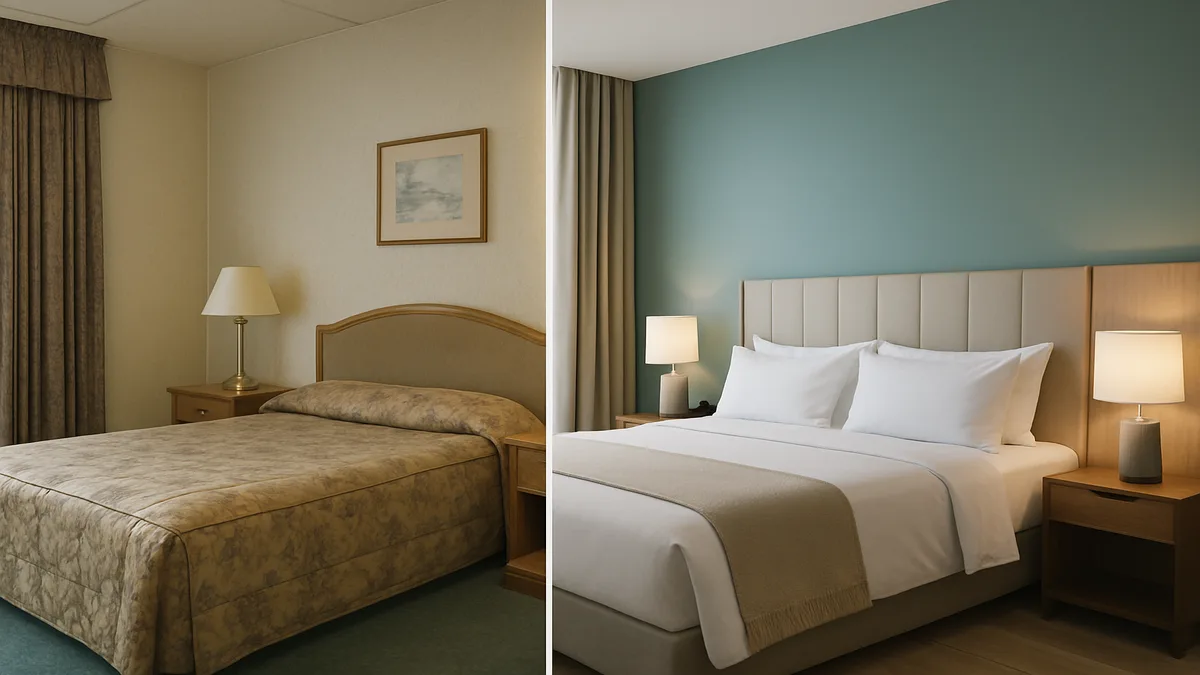
The headline framing is investment-grade real estate. The supplier framing is different: ten hotels built between roughly 2018 and 2020 are about to hit their first major soft-goods refresh cycle in 2026 to 2027, and Noble will manage that refresh as a single portfolio program rather than ten separate decisions.
The supplier signal. Single-portfolio refreshes are an underrated opportunity for suppliers because the buyer optimises for consistency, simplified vendor management, and volume pricing across the portfolio:
- Casegoods refresh — desks, dressers, headboards across multiple property types
- Soft goods — drapery, decorative pillows, bedscarves, bench cushions
- Lighting — table and floor lamps, sconces, fixture replacements
- Bath programs — towel sets, bath rugs, shower curtains, dispensers
- Loose furniture for lobby and breakfast areas
Window timing. Specification work usually starts within 4 to 8 months of acquisition close, with vendor commitments locked 12 to 18 months out. For Noble’s 10-property buy that translates to specification conversations starting in late summer 2026 and vendor selection running into Q1 2027.
How to position. Volume-tier pricing matters here more than per-room pricing — the bid is for the portfolio, not for any single property. Lead with the cost difference between a 10-property program and a single-property quote, and bring data on the cost of delivery delays across geographies if any one shipment slips.
The pattern these three deals reveal
A $835M single-asset trade, a continent-first brand entry, and a 10-property portfolio buy are very different transactions. But they share three structural features that suppliers should plan around:
- Procurement decisions follow ownership changes on a predictable timeline — 60-90 days for single-asset trades, 6-18 months for brand-first geographic entries, 12-18 months for portfolio acquisitions.
- The earliest conversation wins disproportionately. By the time a deal is widely covered in trade press, the procurement window has often already opened — but very few suppliers reach out in the first 30 days.
- The conversation that wins is the one held against data, not against capability. New ownership teams have already seen the incumbent’s pitch. They want to see a specific cost or delivery delta, in writing, in the first meeting.
We built InnLead’s intelligence feed to surface these signals daily, classify them by category and region, and match them against your specific product catalog so the first outreach is always anchored on a real procurement decision being made now — not a generic capability pitch.
If hotel procurement is the market you sell into, this is the kind of week worth re-running.
Continue reading:
- Hotel FF&E Guide: Furniture, Fixtures & Equipment — the foundation categories these deals will re-tender
- How to Find Hotel Procurement Contacts — getting to the right decision-maker fast when a window opens
- Hotel Trade Shows 2026: Supplier Calendar — where these procurement teams gather in person
Use these related guides to keep moving through the same procurement, sales, or market research thread.
Skip the Manual Work
InnLead.ai's 12 AI agents find hotels buying your products, identify procurement contacts, and book meetings -- automatically.
Get Early Access