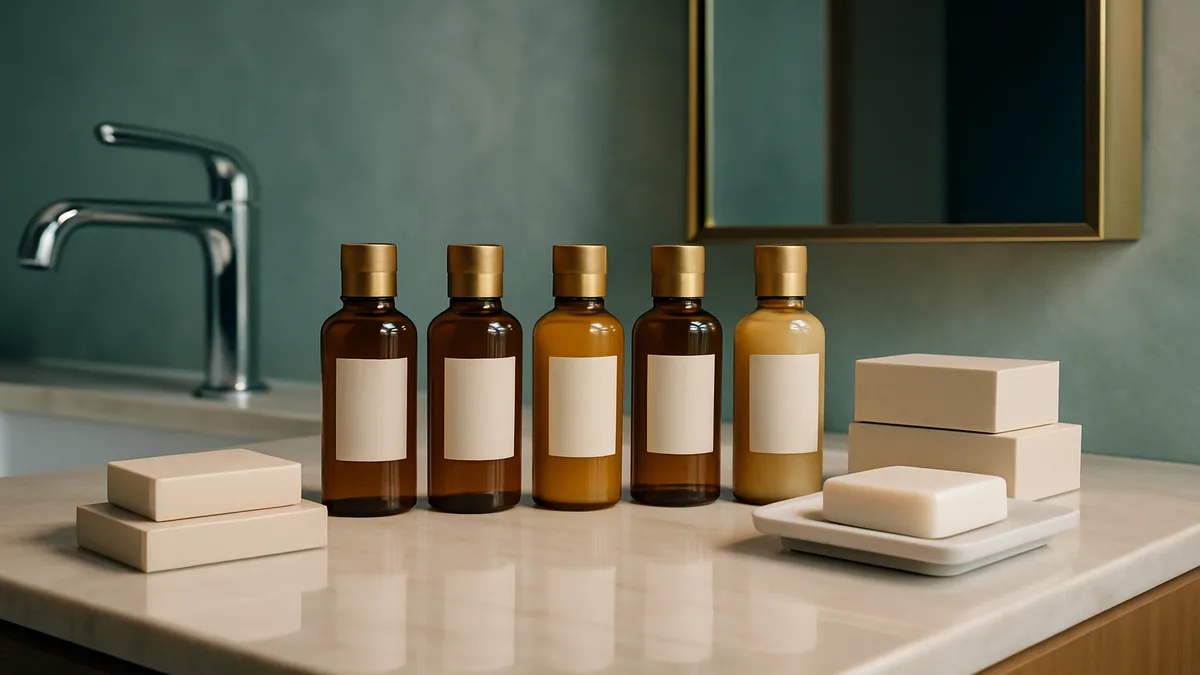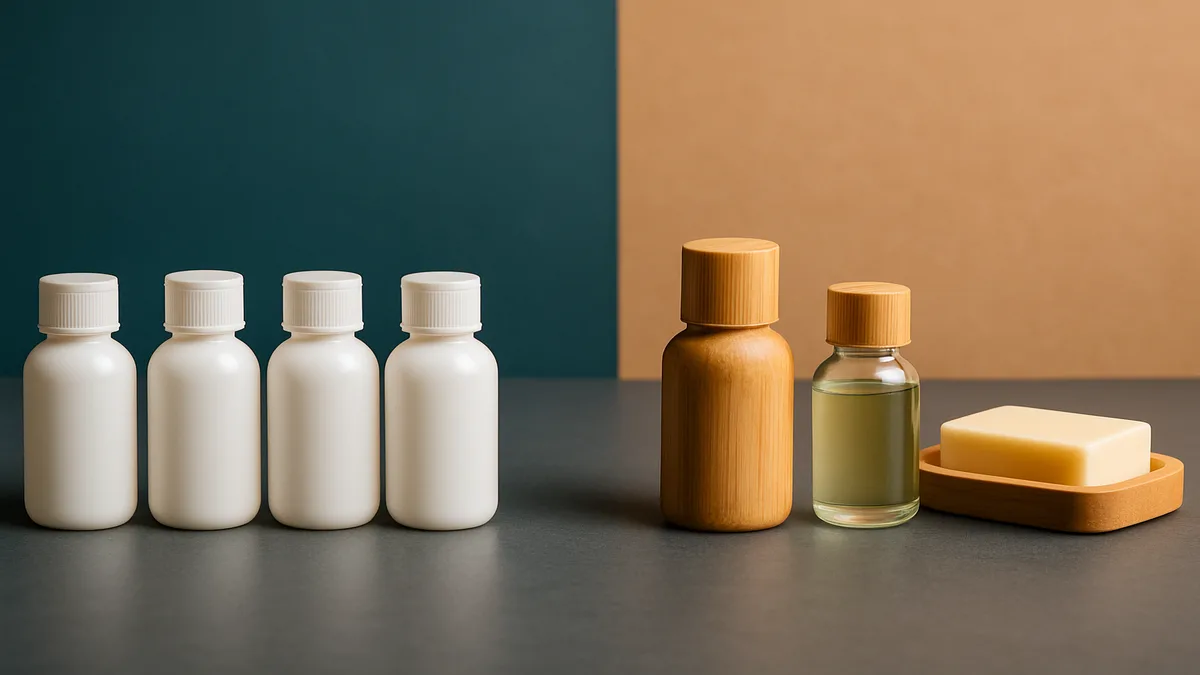
The regulatory ground beneath hotel suppliers is shifting — and it is shifting fast. Between 2023 and 2026, a cascade of single-use plastic bans has moved from legislative proposal to active enforcement across North America, Europe, and Asia. For suppliers selling amenities, toiletries, packaging, or food service products to hotels, the question is no longer whether to adapt. It is how quickly you can retool your product line before penalties arrive and buyer specifications change.
This guide breaks down every major regulation by region, with enforcement dates, specific product categories affected, penalty structures, and — most importantly — the alternative products hotels are now actively purchasing.
Why This Matters More for Suppliers Than for Hotels
Hotels can switch products. That is a procurement decision measured in weeks. Suppliers who lose an entire product category to regulation face months of reformulation, retooling, and recertification. The suppliers who moved early on bulk dispensers, biodegradable packaging, and refillable amenity systems have already captured the first wave of replacement orders. Those still manufacturing single-use mini bottles are watching their addressable market shrink quarter by quarter.
The hotel toiletries market reached $24.3 billion in 2024 and is projected to hit $45.3 billion by 2030, driven largely by the premium and eco-friendly product demand that these regulations accelerate. This is part of a broader sustainable hotel supply opportunity worth $50 billion that suppliers cannot afford to ignore. Suppliers who align their catalogs with the regulatory trajectory will ride that growth. Those who resist it will not.
Master Compliance Timeline: Every Region at a Glance
Before diving into the details, here is the full regulatory landscape in one table. Print this. Pin it to the wall in your product development office.
| Region | Regulation | Key Products Banned | Enforcement Date | Penalties | Status |
|---|---|---|---|---|---|
| California, USA | AB 1162 | Mini plastic toiletry bottles (<6 oz) in hotels 50+ rooms | Jan 1, 2023 | $500 first offense; $2,000 subsequent | Enforced |
| California, USA | AB 1162 (Phase 2) | Mini plastic toiletry bottles (<6 oz) in hotels <50 rooms | Jan 1, 2024 | $500 first offense; $2,000 subsequent | Enforced |
| New York, USA | Proposed bill (S.543/A.2056) | Single-use plastic toiletry bottles in hotels | Pending committee | $250 first offense; $500 subsequent | Proposed |
| Washington State, USA | HB 1085 | Polystyrene food packaging in hotel F&B | Jan 1, 2025 | Civil penalties per violation | Enforced |
| EU | Single-Use Plastics Directive (2019/904) | Straws, stirrers, cotton buds, cutlery | July 3, 2021 | Varies by member state | Enforced |
| EU | Packaging & Packaging Waste Regulation | Single-use plastic cups, meal containers (on-site) | Jan 1, 2024 | Varies by member state | Enforced |
| EU | Packaging & Packaging Waste Regulation (Phase 2) | Individually packaged hotel amenities (mini shampoos, soaps, jams) | Jan 1, 2026 | Varies by member state | Pending |
| UK (Scotland) | Environmental Protection Act update | Single-use plastic plates, cutlery, polystyrene food containers | June 1, 2022 | Fixed penalty notices | Enforced |
| UK (England) | Environmental Protection Act update | Single-use plastic plates, cutlery, polystyrene food containers | October 1, 2023 | Fixed penalty notices, unlimited fines | Enforced |
| India | Plastic Waste Management Rules | 19 categories of single-use plastics including cutlery, straws, stirrers, packaging | July 1, 2022 | Fines under EPA; facility closure risk | Enforced |
| UAE | Federal Decree-Law No. 10 of 2024 | Single-use plastic bags; phased approach to other items | Jan 1, 2024 (bags) | AED 10,000 - AED 1,000,000 | Enforced |
United States: State-by-State Breakdown
California AB 1162 — The First Domino
California set the template. Signed in 2019 and enforced beginning January 1, 2023, Assembly Bill 1162 is the first state law in the nation to ban small plastic toiletry bottles in lodging establishments.
What is banned: Personal care products (shampoo, conditioner, body wash, lotion, etc.) in single-use plastic containers smaller than 6 fluid ounces.
Phase 1 (January 1, 2023): Hotels with 50 or more rooms.
Phase 2 (January 1, 2024): All remaining lodging establishments, including hotels with fewer than 50 rooms, vacation rentals, and bed-and-breakfasts.
Penalties:
- First violation: Written warning
- Second violation: $500 fine
- Each subsequent violation: $2,000 fine
Enforcement mechanism: County or city code enforcement officers, triggered by complaints or inspections.
What hotels are buying instead:
- Wall-mounted bulk dispensers (most common solution)
- Refillable pump bottles in branded packaging
- Solid bar amenities (shampoo bars, conditioner bars)
- Dissolvable pod systems
- Aluminum or glass mini containers (still compliant under AB 1162)
Supplier opportunity: The California market alone includes over 5,800 hotels. The initial replacement wave has already passed, but ongoing refill supply, dispenser maintenance, and upgrades to premium dispenser systems represent recurring revenue. Suppliers offering branded dispenser programs with custom formulations are winning long-term contracts.
New York — The Next Major Market
New York has introduced bill S.543/A.2056, which mirrors California’s approach. The bill would prohibit hotels from providing personal care products in single-use plastic bottles. As of early 2025, the bill has been referred to committee and has not yet reached a floor vote.
What suppliers should do now: Treat New York passage as a certainty for planning purposes. The state has 5,000+ hotels, including the largest luxury hotel concentration in the Western Hemisphere. Waiting for passage means losing the first-mover window to competitors already approaching New York hotel buyers with compliant alternatives.
Washington State
Washington’s HB 1085 targets polystyrene food service packaging, affecting hotel restaurants, room service operations, and catered events. Hotels must use compostable or recyclable alternatives for all food service containers. Enforcement began January 1, 2025.
Broader U.S. Trend
Hawaii, Colorado, Maine, Vermont, and Oregon have all passed or proposed legislation restricting various categories of single-use plastics. While not all specifically target hotel operations, the regulatory direction is clear. Major hotel chains including Marriott and IHG have announced systemwide transitions away from single-use toiletry bottles, creating demand regardless of local legislation.
Stop chasing hotels manually. InnLead.ai’s 12 AI agents scan renovation signals, identify procurement contacts, and book meetings with hotel buyers — automatically. Get Early Access
European Union: The Most Aggressive Timeline
The EU is the global leader in single-use plastic regulation, and its phased approach is systematically eliminating product categories that hotel suppliers have sold for decades.
Phase 1: Already Enforced (July 2021)
The Single-Use Plastics Directive (2019/904) banned the following items outright across all 27 EU member states:
- Plastic straws
- Plastic stirrers
- Plastic cotton buds
- Plastic cutlery (forks, knives, spoons)
- Plastic plates
- Expanded polystyrene food containers
- Expanded polystyrene cups
For hotel suppliers, this eliminated an entire product category. Suppliers who pivoted to paper, bamboo, wood, and PLA alternatives captured massive replacement orders across 2021-2023.
Phase 2: Enforced (January 2024)
The Packaging and Packaging Waste Regulation extended restrictions to:
- Single-use plastic cups for on-site consumption
- Single-use plastic meal containers for on-site dining
Hotels across Europe must now provide reusable cups and containers for in-house dining, or use certified compostable alternatives. This affects hotel restaurants, bars, breakfast buffets, and room service operations.
Phase 3: The Big One (January 2026)
Beginning January 1, 2026, the EU will ban individually packaged hotel amenities. This is the regulation with the largest direct impact on hotel suppliers:
- Mini shampoo bottles
- Mini conditioner bottles
- Mini body lotion bottles
- Mini soap bars in plastic wrap
- Individual jam, butter, and condiment packets in plastic packaging
This affects every hotel in the European Union. There are approximately 200,000 hotels across EU member states. The replacement demand for bulk dispensers, refillable systems, and alternative packaging formats represents a multi-billion-euro opportunity for suppliers who are ready.
Penalty structures vary by member state. Germany, France, and the Netherlands have announced enforcement regimes with fines ranging from EUR 1,000 to EUR 50,000 per violation, depending on the scale and repeat nature of non-compliance.
United Kingdom: Scotland Led, England Followed
Scotland (Enforced June 2022)
Scotland was the first UK nation to ban single-use plastic plates, cutlery, expanded polystyrene food containers, beverage stirrers, and balloon sticks. Hotels throughout Scotland have fully transitioned to alternative products.
England (Enforced October 2023)
England followed with nearly identical restrictions in October 2023, banning:
- Single-use plastic plates
- Single-use plastic cutlery
- Single-use plastic balloon sticks
- Expanded polystyrene food and beverage containers
Penalties: Local authorities can issue fixed penalty notices. For persistent violators, unlimited fines are possible through magistrate courts.
Key difference from the EU: The UK has not yet announced an amenity-specific ban matching the EU’s 2026 mini-bottle prohibition. However, major chains operating in the UK (Marriott, Hilton, IHG, Accor) are transitioning to bulk dispensers across their UK portfolios to maintain consistency with their EU operations. The practical effect for suppliers is the same: mini-bottle demand is declining across the entire UK hotel market.
India: Comprehensive and Immediate
India implemented one of the world’s most sweeping single-use plastic bans on July 1, 2022, covering 19 specific product categories.
Banned items relevant to hotel suppliers:
- Plastic cutlery (forks, spoons, knives)
- Plastic straws
- Plastic stirrers
- Plastic plates and trays
- Plastic cups and glasses
- Plastic wrapping and packaging film under 50 microns
- Plastic carry bags under 75 microns (rising to 120 microns)
- Plastic banners and decorative items
Enforcement: India’s Central Pollution Control Board (CPCB) and State Pollution Control Boards conduct inspections. Penalties include fines under the Environment Protection Act (up to INR 100,000 per day of violation) and potential facility closure for manufacturers of banned items.
Market context: India’s hotel pipeline is one of the largest in the world, with 514 projects and 61,075 rooms under development — representing 26% of the entire Asia-Pacific pipeline excluding China. This construction boom is creating demand for compliant products from day one. New hotels in India are specifying plastic-free amenities in their procurement requirements at the design stage.
Supplier entry point: Indian hotels are actively seeking domestic and international suppliers for bamboo cutlery, bagasse food containers, paper packaging, and bulk amenity dispensers. The price sensitivity of the Indian market means suppliers who can offer compliant alternatives at competitive price points will capture significant volume.
What Suppliers Should Be Manufacturing Now
Based on the regulatory trajectory across all major markets, here are the product categories with the strongest demand growth:
Highest-Priority Replacement Products
| Product Category | Replaces | Primary Markets | Growth Driver |
|---|---|---|---|
| Wall-mounted bulk dispensers | Mini toiletry bottles | Global | CA AB 1162, EU 2026 ban |
| Refillable branded pump bottles | Mini toiletry bottles | Luxury/boutique segment | Brand differentiation |
| Solid bar amenities (shampoo, conditioner) | Liquid mini-bottles | Eco-luxury segment | Zero-waste positioning |
| Bamboo/wood cutlery sets | Plastic cutlery | EU, UK, India, US states | Multiple bans enforced |
| Bagasse food containers | Polystyrene containers | EU, UK, US states | Food service bans |
| Paper/compostable wrapping | Plastic wrap/packaging | Global | Broad packaging restrictions |
| Aluminum mini containers | Plastic mini-bottles | EU, North America | Recyclable alternative |
| Dissolvable amenity pods | Liquid mini-bottles | Innovation-forward chains | Zero-packaging trend |
Certification Requirements
Hotels increasingly require suppliers to provide third-party certification for alternative products. The certifications that unlock the most procurement doors:
- OK Compost (TUV Austria): Required for products marketed as compostable in the EU
- BPI Certified Compostable: The North American equivalent
- FSC Certified: For paper and wood-based alternatives
- Cradle to Cradle: Premium certification for circular economy products
- USDA BioPreferred: For bio-based products in the U.S. federal and hospitality markets
Pricing the Transition: What Hotels Will Pay
Suppliers need to understand the economics from the hotel buyer’s perspective to price alternatives effectively.
| Item | Traditional Plastic Cost | Compliant Alternative Cost | Hotel Willingness to Pay Premium |
|---|---|---|---|
| Mini shampoo bottle (1 oz) | $0.15-0.25 | Bulk dispenser refill: $0.03-0.08 per use | High — saves money long-term |
| Plastic cutlery set | $0.03-0.05 | Bamboo/wood set: $0.08-0.15 | Moderate — regulatory requirement |
| Polystyrene food container | $0.08-0.12 | Bagasse container: $0.12-0.20 | Moderate — regulatory requirement |
| Plastic straw | $0.01-0.02 | Paper straw: $0.02-0.04 | High — low absolute cost |
| Plastic wrap portion | $0.02-0.04 | Paper/wax wrap: $0.04-0.08 | Low-moderate — volume dependent |
The critical insight: bulk dispenser systems actually reduce per-use cost for hotels compared to individual mini-bottles. This makes the sustainability transition economically favorable, not just regulatory compliance. Smart suppliers lead with the cost savings argument, not the compliance argument. For a practical roadmap on reformulating and certifying eco-friendly amenity lines, see our manufacturer pivot guide.
Building Your 2025-2026 Regulatory Compliance Roadmap
For suppliers selling into multiple regions, here is the recommended action timeline:
Q1-Q2 2025 (Now):
- Audit your current product line against all enforced bans
- Identify products that will be banned in 2026 (EU amenity restriction)
- Begin R&D on replacement products if not already underway
- Obtain or begin certification processes (OK Compost, BPI, FSC)
Q3-Q4 2025:
- Launch compliant product lines in time for hotel budget planning season
- Build marketing materials specifically addressing EU 2026 compliance
- Approach European hotel procurement teams with transition packages
- Monitor New York legislative progress — prepare for rapid market entry
Q1 2026:
- EU amenity ban takes effect — all European hotels must be transitioned
- Suppliers with established distribution will capture late-mover hotels scrambling to comply
- Expect peak demand for bulk dispenser systems and refillable alternatives
2026 and Beyond:
- Additional U.S. states will follow California’s model
- Middle Eastern markets (UAE already active) will expand restrictions
- Southeast Asian markets (Thailand, Vietnam, Indonesia) are drafting legislation
- The trajectory is unidirectional — no jurisdiction has reversed a plastic ban
The Bottom Line for Suppliers
Single-use plastic bans are not a trend. They are a permanent structural shift in what hotels are allowed to purchase. Every quarter, the number of jurisdictions with active bans grows. Every quarter, the addressable market for traditional plastic amenities and packaging shrinks.
Suppliers who treat this as a compliance burden will survive. Suppliers who treat it as a product development and market expansion opportunity — reaching hotels that are actively seeking alternatives and willing to sign multi-year supply contracts for compliant products — will grow.
The $24.3 billion hotel toiletries market is being reshaped right now. The suppliers who capture market share during this transition will hold it for decades. Those who wait will find their competitors already entrenched.
The regulatory map is clear. The timelines are published. The only variable is how fast you move. Suppliers who also embrace circular economy models like take-back programs and refill schemes will build the deepest competitive moats. Need help reaching hotels that are actively sourcing compliant alternatives? See how InnLead.ai identifies procurement opportunities automatically.
Use these related guides to keep moving through the same procurement, sales, or market research thread.
Skip the Manual Work
InnLead.ai's 12 AI agents find hotels buying your products, identify procurement contacts, and book meetings -- automatically.
Get Early Access