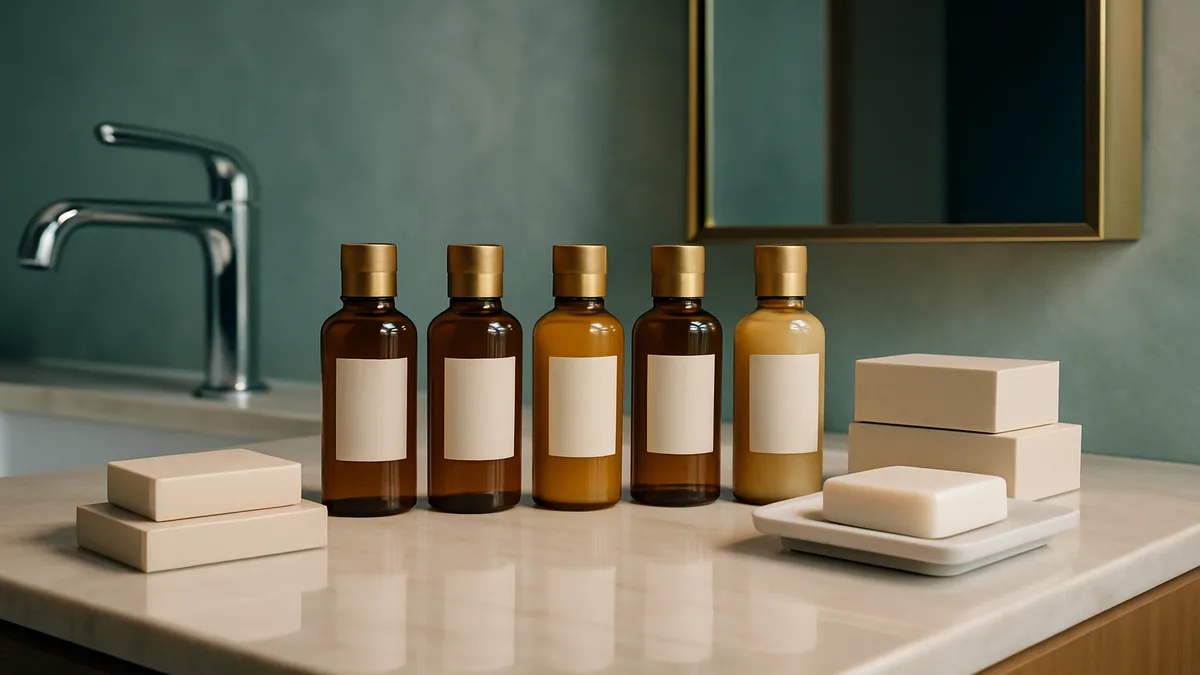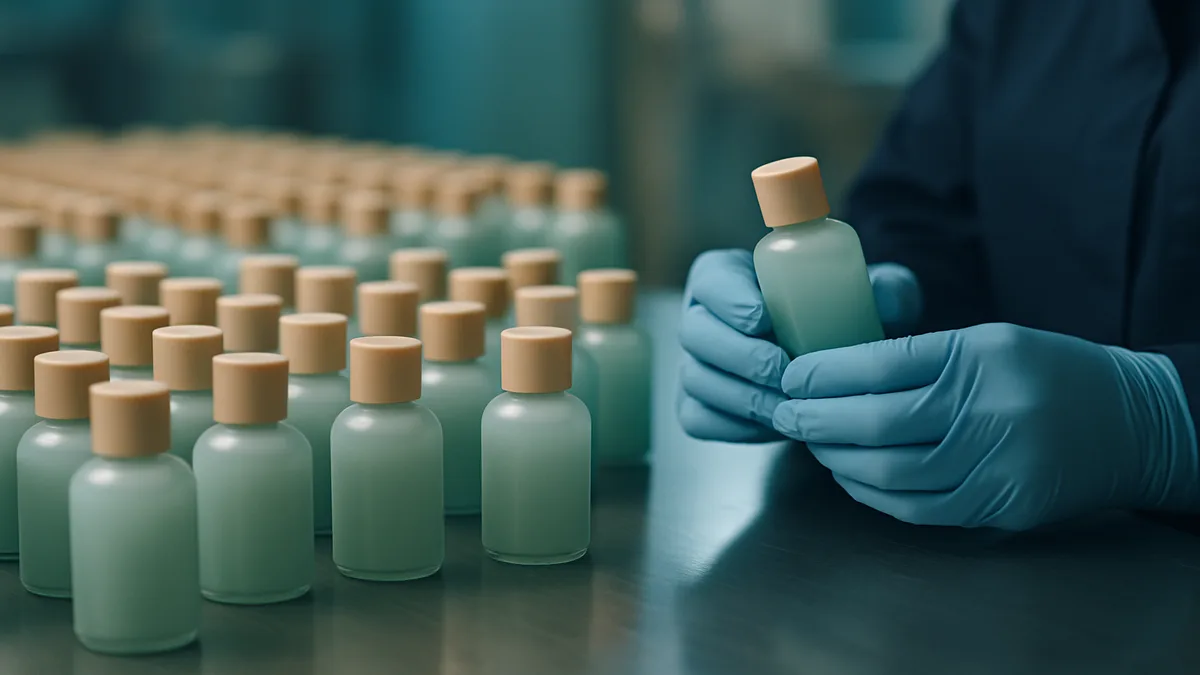
The global hotel toiletries market hit $24.3 billion in 2024 and is projected to reach $45.3 billion by 2030, growing at a 10.9% CAGR. Hotels account for 56.2% of global market revenue. For suppliers looking at accessible entry points into hospitality B2B sales, bathroom amenities offer one of the lowest barriers to entry — and one of the most recurring revenue streams in the industry.
But “low barrier” does not mean “easy money.” The amenities space is crowded, margin-sensitive, and increasingly shaped by sustainability regulations. Suppliers who enter without understanding unit economics, brand approval processes, and buyer expectations burn through capital before landing their first major account.
If you are new to the hospitality market, start with our complete guide to becoming a hotel supplier for the full vendor-portal and GPO roadmap. This guide breaks down the real numbers behind selling hotel bathroom amenities at scale.
Understanding the Product Tiers
Hotel bathroom amenities span a wide cost and quality spectrum. Where you position determines your margin structure, target customer, and competitive landscape.
Cost Per Unit by Quality Tier
| Tier | Product Examples | Cost Per Unit (Manufacturer) | Typical Retail Equivalent | Target Hotel Segment |
|---|---|---|---|---|
| Economy | Basic soap bars, 20ml shampoo sachets | $0.15 - $0.40 | Budget/generic | Economy, midscale (Motel 6, Red Roof Inn) |
| Mid-Range | 30ml branded bottles, moisturizer sets | $0.40 - $1.00 | Drugstore brands | Upper midscale, upscale (Holiday Inn, Hilton Garden Inn) |
| Premium | 40-50ml designer bottles, multi-product sets | $1.00 - $1.75 | Department store brands | Upper upscale (Marriott, Hilton) |
| Luxury | Full-size artisan products, branded partnerships | $1.75 - $2.50+ | Specialty/designer | Luxury (Four Seasons, Ritz-Carlton, St. Regis) |
These costs assume standard manufacturing runs. Custom formulations, organic certifications, or designer licensing can push luxury-tier costs to $4.00+ per unit.
The Bulk Dispenser Shift
California’s AB 1162 — enforced since January 2023 for hotels with 50+ rooms and extended to all hotels in January 2024 — banned small plastic amenity containers under 6 ounces. The EU is following with a ban on individually packaged hotel amenities effective 2026.
This regulatory trend is reshaping the product mix. Bulk dispensers now represent a growing share of new orders:
| Format | Unit Cost | Cost Per Guest Use | Refill Economics |
|---|---|---|---|
| Individual bottles (30ml) | $0.40 - $1.50 | $0.40 - $1.50 | N/A (single use) |
| Bulk wall dispenser (hardware) | $25 - $75 per unit | N/A (one-time) | Amortized over 3-5 years |
| Bulk refill cartridge (300-500ml) | $3.00 - $8.00 | $0.08 - $0.25 | Recurring monthly |
For suppliers, dispensers create a razor-and-blade model: lower margin on the initial hardware sale, higher lifetime value on recurring refills. A 200-room hotel using bulk dispensers might spend $15,000-$20,000 on initial hardware and $800-$1,500 per month on refills — a $25,000-$38,000 annual account.
Margin Structures Across the Supply Chain
The hospitality amenity supply chain typically involves three to four layers between raw material and guest bathroom. Understanding where margins live helps you position correctly.
Margin Breakdown by Role
| Position in Chain | Typical Gross Margin | Key Cost Drivers | Volume Requirement |
|---|---|---|---|
| Manufacturer (private label) | 40% - 70% | Raw materials, formulation, filling, packaging, QC | High (50,000+ units/run) |
| Branded Manufacturer | 50% - 75% | Above + brand licensing, marketing, R&D | High |
| Distributor / Wholesaler | 20% - 35% | Warehousing, logistics, credit terms, sales staff | Medium (5,000+ units/order) |
| Manufacturer’s Rep / Agent | 5% - 15% (commission) | Relationship management, samples, travel | Low (relationship-based) |
The margin compression reality: Major hotel chains negotiate directly with manufacturers, squeezing distributors out of the highest-volume accounts. Distributors survive on independent hotels, smaller chains, and value-added services (consolidated ordering, just-in-time delivery, emergency fulfillment).
If you are a manufacturer, your best margins come from private-label production for brands that sell the story while you run the lines — our guide to private label hotel toiletries and OEM contracts covers formulation models, regulatory compliance, and how to pitch hotel chains. If you are a distributor, your value is in logistics, credit terms, and product breadth — not price competition.
Pricing Example: Mid-Range Shampoo (30ml Bottle)
| Stage | Price Per Unit | Margin Captured |
|---|---|---|
| Manufacturing cost (materials + labor + overhead) | $0.28 | — |
| Manufacturer sells to distributor | $0.55 | 49% gross margin |
| Distributor sells to hotel | $0.78 | 30% gross margin |
| Alternative: Manufacturer sells direct to chain | $0.65 | 57% gross margin |
Direct-to-chain selling captures more margin but requires dedicated account management, credit facilities, and logistics infrastructure that smaller manufacturers may lack.
MOQs by Chain Tier
Minimum order quantities in hotel amenities vary dramatically based on the buyer. Misunderstanding MOQ expectations is one of the fastest ways to lose a deal or overcommit inventory.
Typical MOQ Expectations
| Buyer Type | Typical MOQ (Units) | Order Frequency | Annual Volume (Per Property) | Notes |
|---|---|---|---|---|
| Independent hotel (50-100 rooms) | 500 - 2,000 | Quarterly | 5,000 - 15,000 | Price-sensitive, prefers small initial orders |
| Boutique chain (5-20 properties) | 5,000 - 15,000 | Monthly/Quarterly | 50,000 - 200,000 | Wants custom branding, flexible MOQs |
| Mid-tier chain (50-200 properties) | 25,000 - 100,000 | Monthly | 500,000 - 2,000,000 | Procurement team involved, RFP process |
| Major brand (500+ properties) | 100,000 - 500,000+ | Ongoing (blanket PO) | 5,000,000+ | Corporate procurement, approved vendor list, strict specs |
What Buyers Actually Care About Beyond Price
Pricing matters, but it rarely decides the deal alone. Hotel procurement teams evaluate amenity suppliers across multiple dimensions:
- Consistency — Every batch must match. A color or fragrance shift across production runs triggers guest complaints and brand standards violations.
- Lead time reliability — Hotels cannot run out of shampoo. A 6-8 week lead time is standard; anything over 10 weeks is a dealbreaker for most buyers.
- Regulatory compliance — EU cosmetics regulations, FDA registration, California AB 1162 compliance, REACH compliance for European markets. Missing a single certification can disqualify you from an entire chain.
- Sustainability credentials — 73% of tourists prefer hotels with sustainable practices. Chains increasingly require suppliers to demonstrate recycled packaging, cruelty-free formulations, or carbon offset programs.
- Custom branding capability — Most upper midscale and above hotels want their logo, color scheme, or a co-branded product. Your ability to offer custom packaging at reasonable MOQs is a competitive advantage.
Stop chasing hotels manually. InnLead.ai’s 12 AI agents scan renovation signals, identify procurement contacts, and book meetings with hotel buyers — automatically. Get Early Access
Packaging Requirements by Segment
Packaging is where suppliers frequently underestimate complexity and cost. Hotel brands enforce detailed specifications that go beyond “put our logo on it.”
Common Packaging Specifications
| Requirement | Economy/Midscale | Upscale | Luxury |
|---|---|---|---|
| Container material | HDPE, LDPE, sachets | PET, recycled PET | Glass, aluminum, specialty plastics |
| Label type | Direct print or paper label | Full-wrap shrink sleeve or screen print | Embossed, foil-stamped, or custom mold |
| Color matching | Basic (1-2 brand colors) | Pantone match required | Exact Pantone + finish specification |
| Closure type | Flip-top, disc cap | Pump, flip-top | Pump, screw cap, custom design |
| Minimum branding elements | Hotel name + product name | Logo, tagline, product line name | Full brand story, ingredient list, origin narrative |
| Sustainability requirements | Recyclable preferred | Recyclable required, recycled content preferred | Recyclable or refillable required, sustainability narrative |
Packaging Cost Impact
Custom packaging can add $0.05-$0.30 per unit depending on complexity. For a 100,000-unit order, that is $5,000-$30,000 in packaging costs alone. Factor this into your pricing model from the start — do not absorb it hoping to make it up on volume.
Lead Time Expectations and How to Meet Them
Hotel procurement operates on seasonal cycles. Renovation-driven orders follow PIP (Property Improvement Plan) timelines. Understanding these cadences helps you position inventory and manufacturing capacity.
Standard Lead Times
| Order Type | Expected Lead Time | Penalty for Miss |
|---|---|---|
| Reorder (existing SKU) | 2 - 4 weeks | Risk of losing next order |
| New custom product (approved spec) | 6 - 8 weeks | Delay pushes buyer to competitor |
| New custom formulation + packaging | 10 - 14 weeks | Acceptable if communicated upfront |
| Emergency/rush order | 48 - 72 hours (from stock) | Premium pricing accepted (15-25% markup) |
Hotels plan amenity procurement quarterly or semi-annually. The window between “we need to reorder” and “we’ve run out” is typically 4-6 weeks. Suppliers who maintain safety stock or offer drop-ship programs from regional warehouses win repeat business.
Seasonal Demand Patterns
- Q1 (January-March): Budget finalization, PIP planning. Procurement teams evaluate new suppliers and request samples.
- Q2 (April-June): Spring renovation season begins. Highest volume of new orders and product transitions.
- Q3 (July-September): Peak occupancy in leisure markets. Reorder volume spikes. Minimal supplier switching.
- Q4 (October-December): Budget season for next year. Trade shows (BDNY in November). RFP season for large chains.
How to Price Competitively Without Racing to the Bottom
The single biggest mistake new amenity suppliers make is leading with the lowest price. In a market where established players have scale advantages and incumbents have switching cost protection, undercutting on price alone is a losing strategy.
Pricing Strategies That Work
1. Value-based tiering. Offer good-better-best product lines. Let the economy line compete on price while your premium line captures margin. Many hotels buy across tiers — economy soap bars but premium shampoo and conditioner.
2. Bundled pricing. Package shampoo, conditioner, body wash, lotion, and soap as a complete set at a per-room price. This simplifies procurement decisions and increases your share of the bathroom. A bundled set at $2.80 per room is easier to approve than five separate line items.
3. Volume-break structures. Use aggressive break points that reward commitment:
| Annual Volume | Price Per Unit (Mid-Range Set) |
|---|---|
| 10,000 - 24,999 | $2.80 |
| 25,000 - 49,999 | $2.55 |
| 50,000 - 99,999 | $2.30 |
| 100,000+ | $2.05 |
4. Sustainability premium. Products with legitimate eco-certifications (USDA Organic, EcoCert, Rainforest Alliance) command a 10-20% price premium. Hotels need these for their own sustainability reporting, and procurement teams have explicit budget allocations for sustainable products.
5. Custom branding as a value-add, not a cost center. Offer custom branding at the same MOQ as standard products (if your production allows it). Competitors who charge a $2,000 setup fee for custom labels lose deals to suppliers who absorb this into a slightly higher per-unit price.
Market Entry Checklist
Before you ship your first case of hotel shampoo, verify you have covered these fundamentals:
- Regulatory compliance: FDA registration (US), EU Cosmetics Regulation compliance, California AB 1162 compliant packaging, REACH registration (EU exports)
- Product liability insurance: $1M-$5M minimum coverage. Hotels will not onboard a supplier without it.
- Quality certifications: ISO 22716 (cosmetics GMP) is increasingly required by major chains. SQF or similar for food-adjacent products.
- Sample program: Budget for 500-1,000 sample kits annually. Hotel buyers expect free samples before any purchasing conversation.
- Credit terms: Hotels expect Net 30-60 payment terms. You need working capital to float this.
- Logistics capability: Can you deliver to multiple properties across a region? Hotels will not manage five different shipping accounts for five amenity products.
Navigating Brand Approval Programs
For amenity suppliers targeting branded hotel chains, the approved vendor list (AVL) is the gateway to volume business. Properties executing PIPs or refreshing amenity programs are typically required to purchase from approved suppliers.
Brand-Specific Requirements
Each major hotel chain maintains its own approval criteria:
Marriott International: Marriott signed 1,200+ deals in 2024 representing 162,000 rooms. To supply amenities, you need ISO 22716 GMP certification, product liability insurance of $5M minimum, regulatory compliance documentation for every market you intend to supply, and samples that match Marriott’s current design package specifications. The approval process takes 6-12 months and requires a dedicated application through Marriott’s procurement portal.
Hilton Worldwide: With 8,397 hotels and 1,251,068 rooms, Hilton’s scale means even a small share of their amenity program represents massive volume. Hilton evaluates sustainability credentials aggressively — their 2030 target includes 50% reduction in waste sent to landfill. Amenity suppliers must demonstrate recycled packaging and cruelty-free formulations to pass evaluation.
IHG Hotels & Resorts: IHG opened 371 hotels in 2024 alone and signed 714 more. Their Garner brand targets 500 hotels in 10 years. IHG’s procurement operates through centralized purchasing agreements, meaning a single approval can unlock hundreds of properties. Application requires financial audits, production capacity verification, and a competitive pricing proposal benchmarked against current approved suppliers.
The Independent Hotel Opportunity
While brand chains offer volume, independent hotels offer margin and flexibility. Independent properties are not locked into approved vendor lists, allowing suppliers to compete on product quality, custom branding, and relationship rather than meeting rigid brand specifications.
The catch: finding independents who are actively buying requires different outreach methods than working through brand procurement channels. Independent hotels make purchasing decisions at the property level (GM or owner), and their buying cycles are less predictable than chain-mandated PIP timelines. For a complete rundown of where amenities sit within the broader hotel operating supplies ecosystem, use our OS&E checklist to size adjacent opportunities.
Finding Hotel Buyers Who Are Actually Buying
Having the right product at the right price means nothing if you cannot get it in front of the right buyer at the right time. The amenity space has three primary buying triggers:
- Renovation / PIP cycle — When a hotel renovates, everything in the bathroom gets reconsidered. The current PIP backlog is estimated at $12-15 billion, with 300,000-400,000 rooms being renovated annually.
- Brand standard change — When a chain updates its amenity standards (Marriott’s shift to bulk dispensers, Hilton’s sustainability requirements), every property must comply within 12-18 months.
- Cost optimization — Mid-contract, procurement teams review supplier pricing annually. If you can demonstrate savings without sacrificing quality, you can displace incumbents.
The challenge is knowing which hotels are in which phase. Trade shows like HD Expo (600 exhibitors representing 25+ industry sectors) and BDNY help, but they happen once a year. Cold outreach to the wrong property at the wrong time wastes months.
This is where signal-based prospecting changes the game. Renovation permits, PIP announcements, brand conversion filings, and procurement RFPs create a trail of buying signals that, when monitored systematically, tell you exactly which hotels need amenities and when.
The suppliers who win at scale are the ones who show up with the right product, at the right price, at the moment the buyer is ready to buy. Everything else is noise. For a full playbook covering every sales channel from trade shows to AI-powered outreach, read our guide on how to sell products to hotels. And if you want those buying signals delivered to your inbox automatically, explore InnLead.ai’s services.
Use these related guides to keep moving through the same procurement, sales, or market research thread.
Skip the Manual Work
InnLead.ai's 12 AI agents find hotels buying your products, identify procurement contacts, and book meetings -- automatically.
Get Early Access